
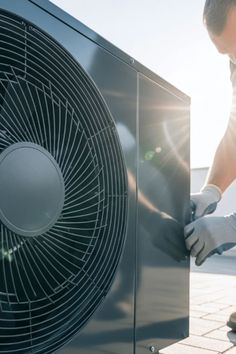
When a heat wave lasts a day or two, most air conditioning systems simply work harder. When high temperatures stick around for a week or longer, the pressure starts showing up everywhere.
Homeowners notice rooms that are not cooling properly. Older systems run almost nonstop. Capacitors, motors, compressors, drain lines, and electrical components are pushed harder. HVAC companies see call volume climb at the exact time technicians are already working full schedules.
That pattern is becoming increasingly important for HVAC contractors across the United States. ACHR News recently highlighted longer heat waves as a major HVAC challenge, noting that contractors are seeing surges in service demand as homeowners try to stay comfortable during extreme heat.
Why Extended Heat Is Different From a Normal Hot Day
An air conditioner is designed to handle summer weather, but extended periods of high outdoor temperatures change how the equipment operates.
Instead of cycling on and off normally, a system may run for long stretches. That means components get fewer breaks, electrical consumption rises, and small maintenance problems can turn into service calls much faster.
A dirty condenser coil that seemed manageable in mild weather can become a serious performance problem during a heat wave. A weak capacitor may finally fail. A partially clogged condensate drain may overflow after the system has been producing moisture for hours at a time.
For homeowners, the failure often feels sudden. For contractors, it is usually the result of equipment being pushed to its limit.
Service Demand Can Spike Very Quickly
One of the hardest parts of extreme heat for an HVAC business is that demand does not increase gradually.
A contractor may go from a normal summer schedule to a backlog of no-cooling calls in a matter of days. Customers calling during a heat wave are also more urgent. They are not researching a replacement they might make six months from now. They often need someone who can answer the phone, diagnose the problem, and provide a clear next step quickly.
That creates an operational challenge, but it also creates a marketing challenge.
If a homeowner searches for an HVAC company during extreme heat and lands on a slow website, cannot find the service area, or has trouble tapping the phone number on mobile, that contractor can lose the call before a technician ever gets involved.
Your Website Matters More When Customers Are in a Hurry
During normal conditions, homeowners may compare several companies, read service pages, check reviews, and spend time researching options.
During a no-cooling emergency, the decision process can become much shorter.
People want to know a few things immediately:
- Do you provide AC repair?
- Do you serve my city or neighborhood?
- Can I call you right now?
- Do you look trustworthy?
- Can you actually handle the problem I have?
That is why HVAC websites need more than attractive design. The phone number should be obvious on mobile. Service areas should be easy to find. Emergency and repair services should have dedicated pages. Reviews and trust signals should appear close to the call to action.
Speed matters too. A customer with a hot house is unlikely to be patient with a page that takes several seconds to become usable.
Google Ads and Local Search Get More Competitive During Heat Waves
Higher demand can also change paid and organic search behavior.
When more homeowners search terms such as “AC repair near me,” “air conditioner not cooling,” or “emergency HVAC repair,” contractors may see more impressions, more clicks, and more competition for the same high-intent searches.
This is where tracking becomes especially important.
A contractor should know which campaigns produce real phone calls, which calls turn into booked jobs, and which service areas are producing profitable work. Looking only at clicks or form submissions can hide what is actually happening.
The same principle applies to SEO. Ranking for broad HVAC terms is useful, but service-specific and location-specific visibility becomes especially valuable when demand spikes.
Maintenance Messaging Should Start Before the Next Heat Wave
Contractors also have an opportunity to educate customers before equipment is under maximum strain.
Seasonal content can remind homeowners to replace filters, keep outdoor units clear, schedule preventive maintenance, pay attention to unusual noises, and call before a small cooling problem becomes a complete system failure.
This type of content is useful because it answers real homeowner questions without turning every article into a sales pitch.
It can also support local SEO when it links naturally to relevant AC repair, maintenance, replacement, and service-area pages.
Heat Waves Are Also a Capacity Planning Problem
Marketing can generate demand, but a contractor still has to be able to handle it.
If every campaign is running at full speed while technicians are booked several days out, the company may end up paying for leads it cannot serve.
During extreme weather, HVAC owners should pay attention to the connection between marketing and operations. That can include adjusting ad budgets by service area, prioritizing the most profitable job types, communicating realistic availability, and reviewing call recordings to see how overflow demand is being handled.
Good marketing during a heat wave is not simply about generating as many leads as possible. It is about generating the right calls and making sure the business can convert them into completed work.
What HVAC Contractors Should Review Right Now
For contractors serving markets experiencing prolonged summer heat, this is a good time to review the parts of the customer journey that matter most during urgent searches.
- Make sure the phone number is easy to tap from every important mobile page.
- Check that AC repair and emergency service pages clearly explain where you work.
- Test website speed on a real phone, not just a desktop computer.
- Confirm that Google Ads calls and website calls are being tracked correctly.
- Review Google Business Profile information, hours, categories, and recent reviews.
- Make sure dispatch capacity and marketing spend are aligned.
- Publish useful seasonal content before the next demand spike.
The Bigger Opportunity
Extreme weather exposes weaknesses quickly.
For an HVAC system, that might be a worn component or neglected maintenance. For an HVAC business, it might be a slow website, weak local visibility, missed calls, poor tracking, or advertising that cannot distinguish a click from a booked job.
Contractors who fix those problems before the next major heat wave are in a much better position when demand suddenly increases.
If you are not sure whether your website is ready for high-intent summer traffic, Axemetric Digital offers a free HVAC and plumbing website audit covering mobile conversion, speed, trust, service areas, forms, SEO, and lead-tracking gaps.